How to Use Artificial Leaves to Enhance Your Indoor and Outdoor Spaces?
Artificial Leaves are more than just decorative elements; they transform spaces and elevate environments. A report from Allied Market Research indicates that the global artificial plants market is expected to reach USD 2.6 billion by 2025, largely driven by the growing trend of indoor greenery. These materials offer a solution for urban dwellers seeking to bring nature into their homes and offices.
However, these enhancements are not flawless. While Artificial Leaves provide low-maintenance greenery, they can lack the refreshing qualities of real plants. Some users report a disconnect, feeling that artificial greenery doesn’t contribute to their overall well-being as live plants do. Balancing aesthetics with authenticity is crucial. Therefore, understanding how to incorporate Artificial Leaves effectively becomes essential.
In conclusion, embracing Artificial Leaves can be a game-changer for both indoor and outdoor spaces. They serve as excellent alternatives for those without the time or skills to care for live plants. Yet, we must remain mindful of the balance between beauty and reality when creating our green spaces.
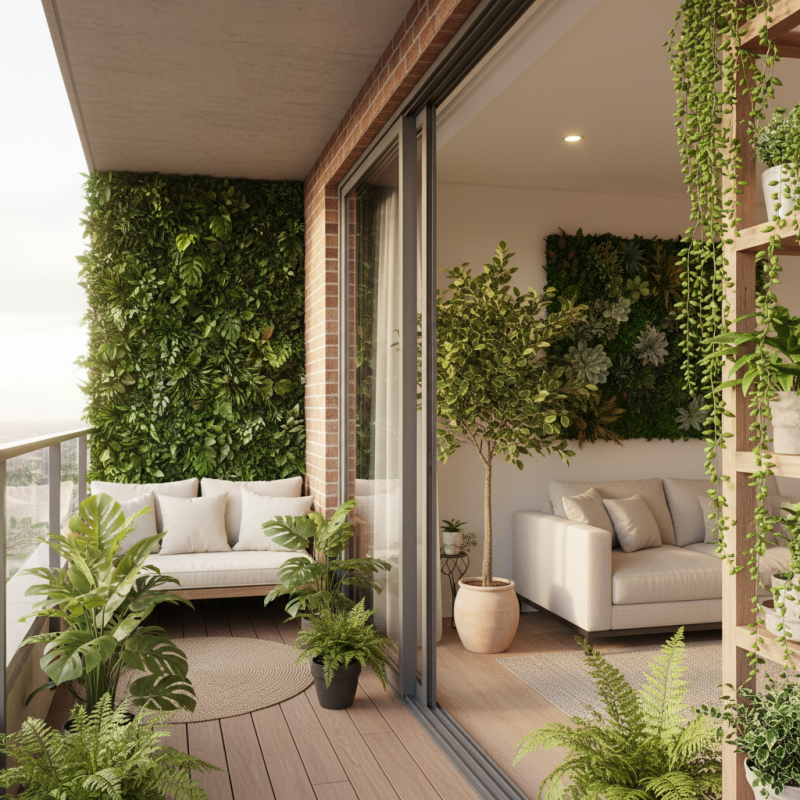
Understanding Artificial Leaves and Their Benefits for Spaces
Artificial leaves have gained popularity as a versatile solution for enhancing various spaces. They mimic the texture and color of real foliage, providing a lush, green aesthetic without the ongoing maintenance. These leaves can brighten up interiors and exteriors alike. You can place them in any room or garden. Their visual appeal makes them suitable for both home decoration and commercial spaces.
One benefit of artificial leaves is their durability. Unlike real plants, they won’t wilt or require watering. This reliability makes them perfect for busy environments. Additionally, artificial leaves come in various styles. You can find options that reflect different climates and seasons, allowing for creative expression. However, it’s important to choose quality materials. Low-quality options may look fake and detract from your space.
While artificial leaves offer many advantages, they also require thoughtful placement. Overcrowding a space with them can lead to a cluttered feeling. Balance is key; incorporate them with real plants for a layered look. Reflect on how the artificial leaves interact with your decor. This thoughtful approach can truly elevate your indoor and outdoor designs.
Choosing the Right Type of Artificial Leaves for Your Environment
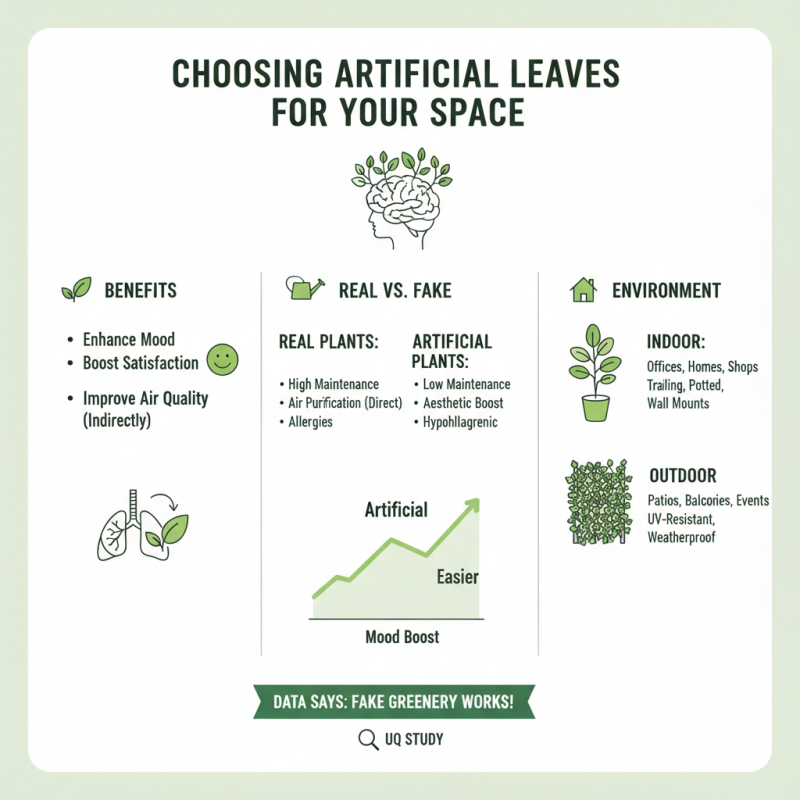
Choosing the right type of artificial leaves can significantly transform your environment. Data indicates that indoor plants can improve air quality, but not everyone can maintain real ones. A study from the University of Queensland shows that artificial greenery can still enhance mood and overall satisfaction in a space.
When selecting artificial leaves, consider the setting. For bright, sunny rooms, vibrant green foliage mimics life and can uplift the atmosphere. In contrast, muted colors work well in more relaxed areas, creating a serene vibe. Indoor spaces benefit from plants that don’t require sunlight. For outdoor areas, opt for UV-resistant materials to ensure longevity.
Tip: Mix different styles of artificial leaves to add depth. Incorporating textures like glossy and matte surfaces can create a more realistic look. However, avoid overcrowding the space with too many elements. An overly cluttered arrangement can feel chaotic. Balance is crucial for a pleasing aesthetic.
Choosing the right artificial leaves can sometimes be challenging. Many products look authentic, but quality varies. Look for options with detailed veins and realistic textures. Conduct research and read user reviews to ensure reliability. Even with artificial leaves, your environment's overall design must reflect your personal style.
Creative Ways to Incorporate Artificial Leaves Indoors
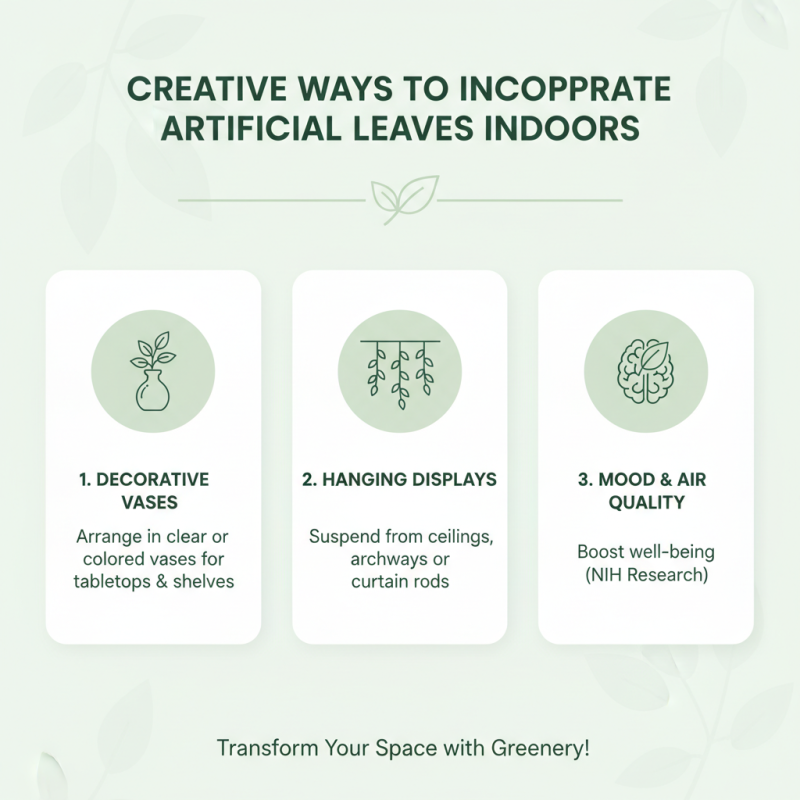
Incorporating artificial leaves into your indoor spaces can drastically transform your environment. Research by the National Institute of Health shows that plants, whether real or artificial, can improve air quality and enhance mood. By adding layers of greenery, you create a calming atmosphere. Consider using artificial leaves in decorative vases or hanging them from the ceiling. This approach not only brings nature indoors but also provides versatility in layout and design.
Creating focal points with artificial leaves is effective as well. A study from the Journal of Environmental Psychology highlights that well-decorated spaces can increase productivity by 15%. Use wall-mounted greenery to draw attention. Place larger leaves on shelves or tables for a bold statement. You may even mix textures—combine glossy leaves with matte surfaces. This interplay adds visual interest but requires careful selection to avoid overwhelming the space.
However, the challenge lies in ensuring they look realistic. Some artificial leaves can appear plastic or cheap, which detracts from their intended effect. A thoughtful arrangement can mitigate this issue. Use a variety of leaves to create depth, but avoid overcrowding. This balance is crucial for achieving an authentic look. Regularly step back and reassess your designs; small changes can make a significant impact.
Enhancing Outdoor Spaces with Artificial Leaves: Tips and Tricks
Artificial leaves can dramatically enhance outdoor spaces, bringing lush greenery even in urban settings. The use of artificial foliage can increase aesthetic appeal and encourage relaxation. According to the National Gardening Association, 55% of Americans prioritize outdoor living spaces, highlighting the demand for appealing decoration.
When incorporating artificial leaves, consider placement and variety. Mix different shapes and shades for a natural look. Hanging artificial vines can create an illusion of vertical space. Integrating them with other elements like lights can elevate the ambiance during evening gatherings. However, be cautious; using too much may overwhelm a space, losing the serene effect.
Reflect on the maintenance aspect. While artificial leaves require less upkeep than real plants, they still need cleaning. Dust accumulation can diminish their appeal. A microfiber cloth can restore their vibrancy. Balancing the artificial with genuine elements, like potted herbs, can provide authenticity, enriching the overall experience.
Enhancing Outdoor Spaces with Artificial Leaves: Usage Statistics
Maintenance and Care for Artificial Leaves in Your Home and Garden
Caring for artificial leaves is crucial for maintaining their appearance. Regular cleaning is essential. Dust can accumulate, making them look dull. A simple solution is to wipe them down with a damp cloth weekly. This keeps them looking vibrant. In some cases, a mixture of mild soap and water is needed.
Exposure to sunlight can fade colors. Storing them away from direct sunlight helps maintain their brightness. Surveys suggest that homeowners prioritize aesthetics. About 70% of individuals use artificial leaves for visual appeal. Additionally, rotation of leaves can prevent uneven wear and tear, enhancing their longevity.
For outdoor spaces, weatherproofing is vital. While many artificial leaves are weather-resistant, periodic checks for damage are wise. Rain and wind can lead to fading or brittleness over time. Adopting a routine inspection every month could save significant replacement costs in the future. Keeping track of when and how often they are cleaned helps ensure they remain a stunning feature in any garden.